

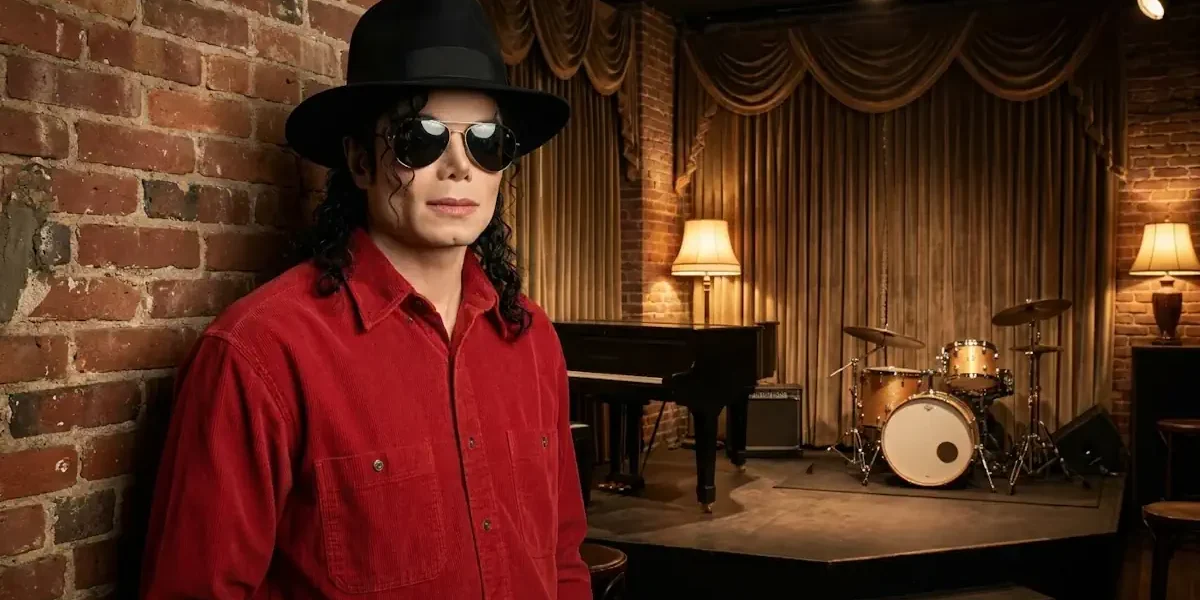
Few celebrity questions have been searched, argued about and misreported as often as this one. Michael Jackson started his career as a brown-skinned child star and ended it with skin that looked almost completely white. For years, tabloids called it bleaching, vanity or an attempt to change his race. The medical record tells a different story.
Below, we walk through what actually happened, using his own words, his doctor’s statements, the 2009 autopsy findings and current dermatology guidance. Where the record is unclear or sources disagree, we say so.
The Short Answer
Michael Jackson’s skin turned white mainly because of vitiligo, an autoimmune condition in which the body destroys the cells that give skin its color. He said so publicly in 1993, his dermatologist confirmed it, and the Los Angeles County autopsy found evidence of it after his death in 2009.
Vitiligo was not the whole story, though. To even out the blotchy patches it left behind, Jackson relied on heavy, fair-toned makeup, and evidence found after his death points to a prescription depigmenting cream called Benoquin. That cream is a standard medical treatment for widespread vitiligo. It removes the remaining pigment so the skin looks one even shade instead of patchy. In other words, the white skin was the result of a disease plus its treatment, not a cosmetic wish to look like another race.
How Michael Jackson Looked Early in His Career
Michael Joseph Jackson was born on August 29, 1958, in Gary, Indiana. Through the Jackson 5 years and his early solo work, including Off the Wall (1979), he had a medium-brown complexion that matched the rest of his family.
The change was gradual. Around the Thriller era (1982 to 1984), people close to him noticed he was covering up more, often wearing a single glove and long sleeves. By the mid-to-late 1980s, his face and hands were visibly lighter, and by the early 1990s he appeared very pale on stage and in videos.
Because Jackson stayed silent about it for years, the public filled the gap with guesses. The most damaging was that he was ashamed of being Black and was bleaching his skin on purpose. That claim followed him for the rest of his life.
Here is how the key events line up:
| Year | What happened |
|---|---|
| 1958 | Born in Gary, Indiana, with a medium-brown complexion. |
| 1983 | Dermatologist Dr. Arnold Klein said he first noticed signs of vitiligo and diagnosed discoid lupus. |
| 1984 | Scalp burned during a Pepsi commercial shoot (January 27). Unrelated to his skin color. |
| 1986 | Klein formally diagnosed vitiligo, according to Associated Press reporting. |
| Late 1980s | Skin noticeably lighter; bleaching rumors spread in the press. |
| February 10, 1993 | Jackson tells Oprah Winfrey he has a skin disorder that destroys pigment. |
| June 25, 2009 | Jackson dies at age 50 in Los Angeles. |
| 2009 to 2010 | Autopsy confirms vitiligo; Benoquin listed among medical evidence. |
Note that sources give slightly different diagnosis dates. Klein’s accounts place his first observation in 1983, while some reports cite 1984 or 1986 for the formal vitiligo diagnosis. All of them agree the condition began in the early 1980s.
What Is Vitiligo?
Vitiligo is a long-term skin condition in which the immune system attacks melanocytes, the cells that make melanin (skin pigment). Where those cells are damaged or lost, the skin turns milky white. It can also whiten hair, eyelashes and the skin inside the mouth.
A few facts help explain why it was so visible on Jackson:
- It is common. Roughly 1% of people worldwide have it, and a 2020 survey estimated about 1.4% of U.S. adults have been diagnosed.
- It affects every skin color, but the contrast is far more noticeable on darker skin.
- Non-segmental vitiligo is the main type, making up about 85% to 90% of cases. It appears on both sides of the body and can keep spreading over the years, which matches Jackson’s pattern.
- Genes play a role. About a quarter of people with vitiligo have a blood relative with the condition. Jackson himself said it ran in his family.
- It is not contagious and is not caused by diet, hygiene or anything a person did.
Vitiligo is also linked with other autoimmune diseases, which is relevant because Jackson was reported to have lupus as well.
Michael Jackson’s Own Explanation
Jackson finally addressed the subject on February 10, 1993, in a live ABC interview with Oprah Winfrey filmed at his Neverland Ranch. It became one of the most-watched interviews in TV history, with an average audience of around 62 million viewers.
When Oprah asked about his color, he said he had a skin disorder that destroyed his pigmentation, that it ran in his family, and that it started sometime after Thriller. His most quoted line was simple: “It is something I cannot help.”
He also said he had never purposely bleached his skin, that he used makeup to even out the blotches, and that he was proud to be Black. He added that hearing people claim he did not want to be who he was hurt him deeply.
Days later, at Jackson’s request, Dr. Arnold Klein issued a statement through the Associated Press confirming the vitiligo diagnosis and stressing that it was not contagious.
What the Autopsy Confirmed
Jackson died on June 25, 2009. The autopsy was carried out by Dr. Christopher Rogers, a deputy medical examiner with the Los Angeles County coroner’s office, and the full report was later made public.
On the skin question, the findings were clear:
- The report confirmed vitiligo, with areas of focal depigmentation, so some skin looked light and other areas darker.
- Pigment cells were reduced, not completely absent, which fits long-term vitiligo plus treatment.
- Benoquin, labeled a depigmenting agent, was listed among the medical evidence. Tubes of Benoquin and hydroquinone were also reported found in his home.
- The autopsy noted cosmetic tattoos on his eyebrows, lips and around the eyes, consistent with someone working hard to keep a uniform look.
What the autopsy did not settle is lupus. Klein said for years that Jackson had discoid lupus, a form that mainly affects the skin and makes it sensitive to sunlight. The autopsy neither confirmed nor ruled it out, so lupus remains a doctor’s claim rather than a proven finding.
The Role of Makeup and Sun Protection
As patches of white spread across his face, hands and chest, Jackson had two choices: darken the light areas or lighten the dark ones. Darkening large white areas is very difficult, so he went the other way. He used fair-colored makeup to blend the remaining brown spots into the lighter skin, a technique dermatologists call cosmetic camouflage.
His son, Prince Jackson, later said on Mike Tyson’s podcast that his father felt insecure about looking blotchy and wanted to smooth out his appearance for his own confidence.
The umbrellas, hats, surgical masks and long sleeves that fans and photographers mocked also had a medical side. Skin without melanin has almost no natural defense against UV rays. It burns quickly and carries a higher risk of sun damage, and lupus can add even more light sensitivity. For someone with depigmented skin, staying covered in the sun is basic care, not eccentricity.
Were Skin Lightening Treatments Involved?
Yes, the evidence suggests so, but probably not in the way the rumors claimed. This is the part many articles skip or leave vague.
Benoquin is the brand name for monobenzone, a prescription cream used for patients whose vitiligo already covers most of the body. Instead of trying to bring the color back, it permanently removes the pigment that is left so the skin becomes one even shade. Doctors offer it when repigmentation is unrealistic and the patchy look is causing distress.
So when Jackson told Oprah he had not bleached his skin, he was rejecting the idea that he lightened healthy skin to look white. Using a depigmenting drug to treat advanced vitiligo is a different thing. What remains unknown is exactly when he started Benoquin, who prescribed it and how long he used it. No public record answers those questions, and any article that gives precise dates is guessing.
Myths That Still Spread Online
Myth 1: He wanted to be white
Jackson repeatedly said the opposite and called himself proud to be Black. The medical evidence shows a disease that removed his pigment, not a racial choice.
Myth 2: The Pepsi accident changed his skin
On January 27, 1984, pyrotechnics set his hair on fire during a Pepsi commercial shoot, causing serious scalp burns. Those injuries led to scalp surgeries and painkiller use, but burns do not cause body-wide pigment loss.
Myth 3: Plastic surgery made him white
Jackson had well-documented nose surgeries and other cosmetic procedures, which changed the shape of his face. Surgery cannot change skin color, though. That is a separate issue that often gets blended into the vitiligo story.
Myth 4: It was all makeup
Makeup evened things out, but it did not create the condition. The autopsy confirmed vitiligo underneath.
How Vitiligo Is Treated Today
There is still no cure, but options are better now than in Jackson’s time. A dermatologist will usually choose based on how much skin is affected and how fast it is spreading:
- Topical corticosteroids and calcineurin inhibitors (such as tacrolimus) to calm the immune attack on small areas.
- Ruxolitinib cream (Opzelura). On July 18, 2022, the FDA approved it as the first treatment for repigmentation in non-segmental vitiligo, for patients 12 and older, on up to 10% of body surface. In trials, about 30% of patients reached at least 75% facial improvement at 24 weeks, and roughly half did by week 52.
- Narrowband UVB light therapy, often used for wider areas.
- Depigmentation therapy with monobenzone for people with very extensive vitiligo, the route Jackson appears to have taken.
- Camouflage makeup, sunscreen and yearly skin checks, since depigmented skin burns easily.
Many people also choose no treatment at all and simply embrace their skin. That is a valid choice too.
Why This Story Still Matters
Jackson’s case shows how fast speculation can replace medical facts when a famous person stays quiet. For years he was mocked for a condition he did not choose, and even today his skin is often discussed as a punchline.
His 1993 interview also had an upside. It put the word “vitiligo” in front of tens of millions of people who had never heard it, and it is still one of the main reasons people search for information about the condition. For anyone living with vitiligo, the real lesson is that a change in skin color is a medical matter, not a statement about identity.
Frequently Asked Questions
Did Michael Jackson really have vitiligo?
Yes. He said so in 1993, his dermatologist confirmed it, and the 2009 autopsy found it.
Was Michael Jackson born with light skin?
No. He had a medium-brown complexion as a child and young man. The lightening began in the early 1980s.
Did Michael Jackson bleach his skin?
Not to change his race. Evidence points to Benoquin, a prescription depigmenting cream used for widespread vitiligo to even out patchy skin.
Did Michael Jackson have lupus?
His dermatologist said he had discoid lupus, but the autopsy neither confirmed nor ruled it out.
Can vitiligo turn someone completely white?
It can spread over most of the body, though total loss of pigment is uncommon. Depigmentation therapy can then remove the remaining color.
Is vitiligo contagious or dangerous?
It is not contagious and does not shorten life. The main medical risk is sunburn on unprotected white skin.
Disclaimer
This article is for general information only and is not medical advice. If you notice new white patches on your skin, see a board-certified dermatologist. Details of Michael Jackson’s private medical care, including exact treatment dates, have never been fully disclosed, and we have flagged those gaps where they apply.